
The Future, Again
A warm welcome and introduction to what I will be doing here.

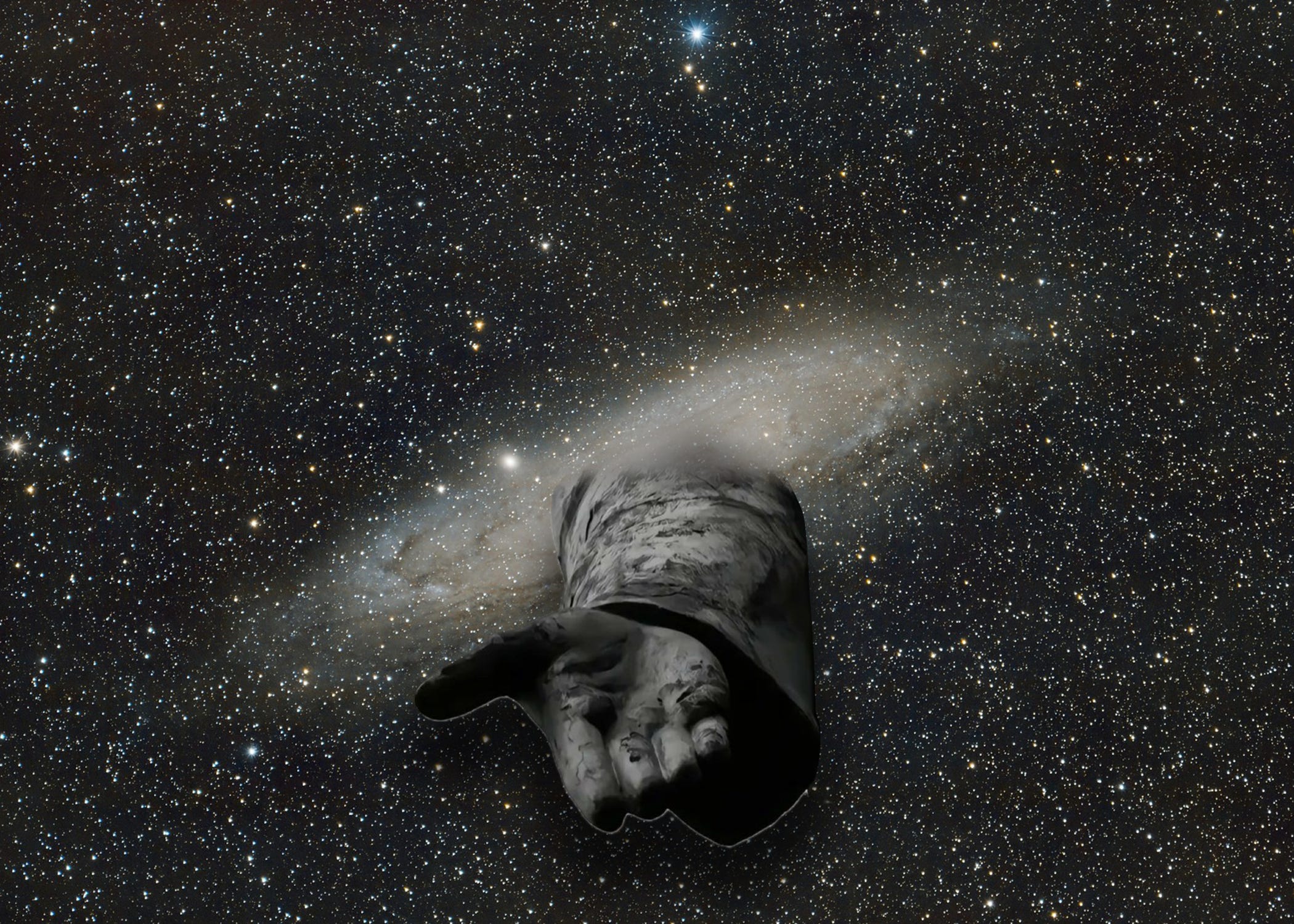
We are, today, in the midst of a crisis of political imagination. It is not an isolated crisis but rather bound up with several others. Most potently, the crises of capitalism and hegemonic liberalism. We are also at the end of a series of ends: we are at the end of the End of History, which itself marked the end of mass politics and genuine ideological confrontation. We may even be at the end of labor as we know it, if you take the claims of both the radical optimists and pessimists on artificial intelligence seriously (I am not convinced). But the crisis of political imagination is, for me, primary because it makes getting out of these crises unthinkable. It makes moving on from the end of ends unthinkable. In a word, it makes beginnings impossible.
We are thus in desperate need of political imagination, of new political imaginaries. But we are in fact in need of something even more basic than that, even more vague: we are in need of a sense of the future as future, rather than as a merely endless repetition of the present, an “eventless horizon…in which nothing happens forever.”[1] This latter need is less of an imaginary than an orientation, a pre-imaginary. We can think alongside Derrida and suggest that we need to be hospitable to the other, to cultivate an openness to the event, to what he called justice and the democracy to come—that is, to the future itself. This is, for now, more an ethos than a political project, though we are in desperate need of the latter too.
The future, this orientation to the future that I have described, is not something that has always been unimaginable, impracticable, or otherwise unavailable to us. It is something that we once had and that we lost. Something that was taken from us, yes. But also, something that was lost due to the left’s own failures. And yes, it was and is always an orientation that involves risk, that always involves danger. The future, Derrida again teaches us, can “only be anticipated in the form of an absolute danger,” in the form of a “monstrosity” that “breaks absolutely with constituted normality.”[2] We are thus “exposed” to the unknown of the future, which we must in some sense always fear as much as welcome.[3] But for us, for the left, for communists, these risks, these dangers, these fears must be accepted wholeheartedly. The reason is very simple: to live on the left is to live with the conviction that the present is fundamentally undignified and insufferable—in a word, rotten. It is then merely a question of opening ourselves to something, anything, other than this.
So, to be clear, this orientation does not involve idealizing the future, nor trafficking in any kind of teleology or determinism that would suggest that the future is destined to be better. Despite frequent mischaracterizations, Marx himself was never such a determinist, as even the first pages of the Manifesto clearly demonstrate. There, we read that every class struggle can end either in a radical reconstitution of society or the “common ruin of the contending classes.”[4] In other words, brighter and darker futures are always equally plausible. The orientation toward the future, then, is a wager. It is not a guarantee. In this, we can take a page from the late Marxist historian Eric Hobsbawm, who describes what it meant to live a life governed by such an orientation:
We didn’t believe in radiant tomorrows. We believed in a world rather than no world. We hoped that that would be a far better world. We hoped that it would be a ‘perfect world’…nevertheless, the real secret of the whole business was, if you believe you are living in a world which is crashing about, your choice is a future or no future.[5]
My belief, then, is that we need to be radically ecumenical to the future, to the unknown of the future—even if we desire a certain kind of future and not another. My desire, a modified version of Derrida’s turn of phrase, is that this future will be shaped not necessarily by a democracy to come, but a “communism to come.” I hope that I may write something one day about this concept and its history, and perhaps its affinities with others, like Alain Badiou’s “communist hypothesis,” but let us leave that aside for the moment.
To return to the topic at hand, I will also say that we need to be ecumenical in our present, too. Ecumenical in the here and now. We need a political ecumenicalism, a radical hospitality that is open to others, even those others whom we are programmed to view as enemies or threats. Of course, this ecumenical orientation has its limits—and they are structural limits. To put it a certain way, the unconditional is always realized only insofar as it has been made conditional. As Michael Naas has wonderfully written:
…the law of unconditional hospitality ‘inspires,’ ‘draws,’ and ‘guides’ the many conditional laws of hospitality. It is thus in the name of the law of unconditional hospitality that conditional laws are made effective and inscribed in history, even if these conditional laws inevitably betray the law of the unconditional and even if they not only expose the perfectibility of this law to pervertibility but sometimes hinder its progress and even lead to its regression.[6]
In a word, “conditional hospitality is the only chance for the unconditional.”[7] The pertinent political question then becomes the nature and degree of those conditions, of those limits. In the spirit of these theoretical commitments, my preference, organizationally speaking, is for an ecumenical left politics that is principled and driven but not dogmatic and sectarian, a left politics that embraces what China Miéville has called a “band” or “zone” of comradeship:
The concept of a ‘party line’ might productively be replaced with that of a ‘band’ or ‘zone’ of reasonable understandings and approaches, certainly not infinitely wide, but more elastic than that notion of a single line to which everyone should conform.[8]
Finally, we need to be ecumenical and hospitable to our past. Retrieving a sense of the future does not, in any way, entail a blank slate, starting from zero, or abandoning the past in toto. We on the left have a rich and proud history—one that we must respect and draw on without hesitation. But this “drawing on,” this “thinking from” our tradition, cannot be base nostalgia or childish cosplay, as it so often amounts to being. Once again, we can draw on deconstruction for lessons: to give our tradition a future, we must reinscribe it, not merely defer to it; to keep our tradition alive, we must transform it.[9] It is the act of transforming and reinscribing that is, in fact, more reverential to our tradition, not the act of passive reception. Our work, therefore, must be conservative in the strict sense. But the mode of that conservatism is quite particular, indeed.[10] As such, much of my writing on this platform will involve reading our predecessors, seeing what they have to tell us, identifying where their limits lie, and groping about in the dark for how they may be reevaluated and reinscribed for our present and future.
A word of caution: Readers will thus find littered throughout my writings here various “hauntological” watchwords.[11] You will, in due time, encounter and be visited by ghosts, specters, phantasms, phantoms, and the like.[12] But their presence will not signify the past haunting our present. Rather, as I have recently elaborated elsewhere, my work here will be haunted by specters of a future yet to come and hangers-on of a future once imagined and now lost.[13] To paraphrase the late Mark Fisher, what should haunt us all is not the no longer of the past, but the not yet of the future that we were once trained to expect but which never materialized. What should haunt us is our lost future.[14] In essence, and this is critical, we shall draw on the past only insofar as the past once allowed us to imagine the future, and only insofar as it allows us to imagine the future, again.
My writings here will take on wide-ranging themes and forms. Readers will see me draw on and grapple with Marxism and post-Marxism, with structuralism and post-structuralism, with liberalism and post-liberalism, with philosophy and other disciplines besides. Key figures will make their influence known through my writing—Marx, Althusser, Derrida, Laclau, Rancière, and others—but their influence will always be a teacher’s and not a master’s. In all its variance, the topography of this space will always be rooted in the orientation I have elaborated above, an orientation to the other, to the event, to the future.
So, dear readers: a future…again. What do you say?
[1] Mark Fisher, “No Future 2012 (for Nick Kilroy).” In Mark Fisher, K-Punk: The Collected and Unpublished Writings of Mark Fisher (2004-2016). Repeater Books (2018), 713-718, 714.
[2] Jacques Derrida, Of Grammatology: Corrected Edition. The Johns Hopkins University Press (1997), 5.
[3] Giovanna Borradori, Philosophy in a Time of Terror: Dialogues with Jurgen Habermas and Jacques Derrida. University of Chicago Press (2003), p. 120. Michael Naas, as usual, has a lovely way of talking about this. He says simply, “…the opportunity is the threat, and the threat the chance.” Michael Naas, Derrida From Now On. Fordham University Press (2008), p. 134.
[4] Karl Marx and Friedrich Engels, The Communist Manifesto. Penguin Classics (1985), p. 79.
[5] se146np, “The Late Show - Special - Eric Hobsbawm - Age of Extremes.” YouTube.
The quote can be found at 14:13.
[6] Michael Naas, Derrida From Now On, p. 25 and passim.
[7] Ibid., p. 26. Mark Dooley and Liam Kavanagh put it this way: “While we desire unconditional hospitality as a means to render our conditional laws and institutions more hospitable, we can only do so in terms of our conditional laws. Otherwise we run the risk of reducing this desire to an empty moralizing cliché.” Mark Dooley and Liam Kavanagh, The Philosophy of Derrida. McGill-Queen’s University Press (2007), p. 111.
[8] China Miéville, A Spectre, Haunting: On the Communist Manifesto. Haymarket Books (2022), p. 155.
[9] As Derrida says, “What does it mean to reaffirm [the past, a tradition]? It means not simply accepting this heritage but relaunching it otherwise and keeping it alive.” He goes on: “It would be necessary therefore to begin from this formal and apparent contradiction between the passivity of reception and the decision to say ‘yes,’ then to select, to filter, to interpret, and therefore to transform; not to leave intact or unharmed, not to leave safe the very thing once claims to respect before all else…” Jacques Derrida and Elisabeth Roudinesco, For What Tomorrow…A Dialogue. Stanford University Press (2004), p. 3-4.
[10] For interested readers, Mark Dooley and Liam Kavanagh, in their interpretation of Derrida’s corpus as a work of memory and mourning have—for the reasons I have suggested and more—essentially tried to paint Derrida as quite a conservative figure. This of course cuts against the popular misreadings of Derrida and deconstruction and is therefore quite useful. I find their analysis compelling and more or less correct, but only if one is explicit about precisely what the nature of Derrida’s conservatism was, and the shape it took in his work. See Mark Dooley and Liam Kavanagh, The Philosophy of Derrida, passim.
[11] For a very brief and useful introduction to hauntology see Mattie Colquhoun, “Key Words: Hauntology.” Red Pepper. May 18, 2025. https://www.redpepper.org.uk/key-words/key-words-hauntology/. For a more thorough treatment, return to the source of its origin, Derrida’s Specters of Marx. The latter has been extremely influential on me, as it has been for so many others. See Jacques Derrida, Specters of Marx: The State of the Debt, the Work of Mourning and the New International. Routledge Classics (2006).
[12] For Derrida, these were all related but distinct concepts, as Michael Naas has brilliantly elucidated. See chapter ten, “Comme si, comme ça: Following Derrida on the Phantasms of the Self, the State, and a Sovereign God,” of Naas’s wonderful Derrida From Now On, p. 187-213.
[13] I discuss these dynamics in a forthcoming article in the Journal of Illiberalism Studies, entitled “Restoring the Past or the Future? Post-liberalism between Nostalgia and Hauntology.” A draft of that paper can be read here: https://www.researchgate.net/publication/397380589_Restoring_the_Past_or_the_Future_Post-liberalism_between_Nostalgia_and_Hauntology
[14] The full quote from Fisher concerns cultural production and reads this way: “What should haunt us is not the no longer of actually existing social democracy, but the not yet of the futures that popular modernism trained us to expect, but which never materialised.” Mark Fisher, Ghosts of My Life: Writings on Depression, Hauntology and Lost Futures, p. 27.